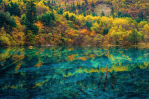
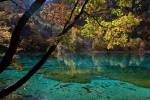
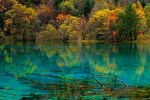
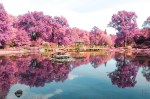
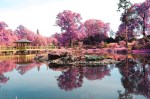
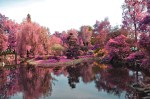
photos from jiuzhaigou, china of wuhua hai, which translates as five flower lake. its colouration from mineral deposits and aquatic plant life, which can be seen thanks to its shallow waters, has also earned it the name five colour lake.
according to ancient legend, the lake, along with the 107 other such lakes in the region, were created when a goddess dropped and smashed a mirror her lover had given her into 108 pieces. (click pic or link for credit x, x, x, x, x, x, x)
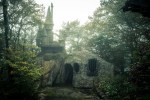
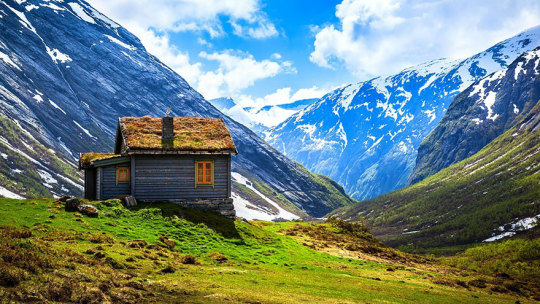
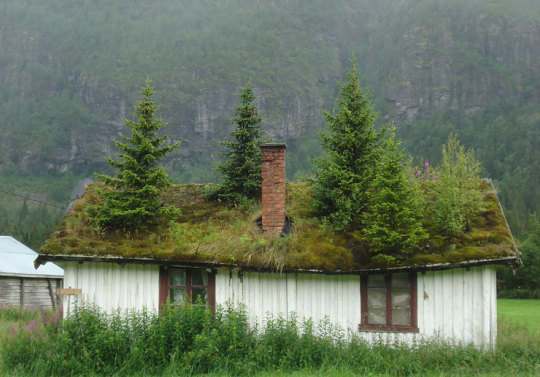
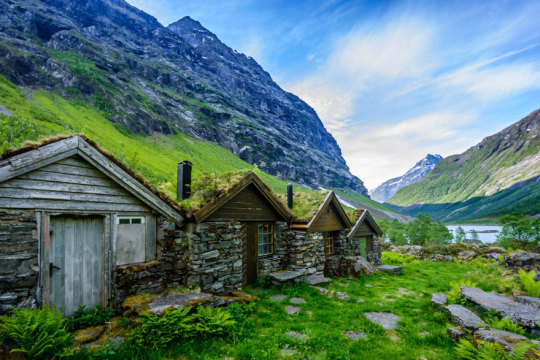
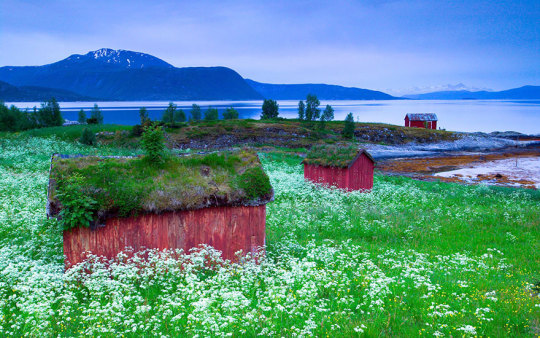
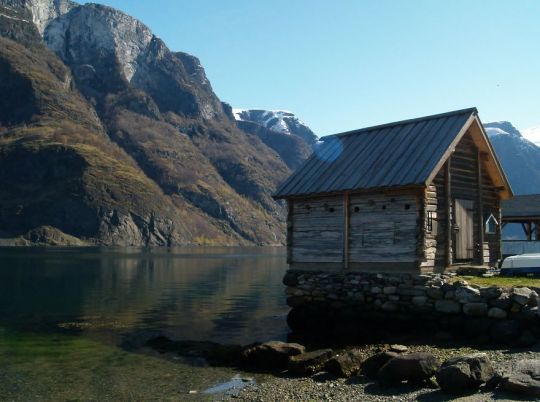
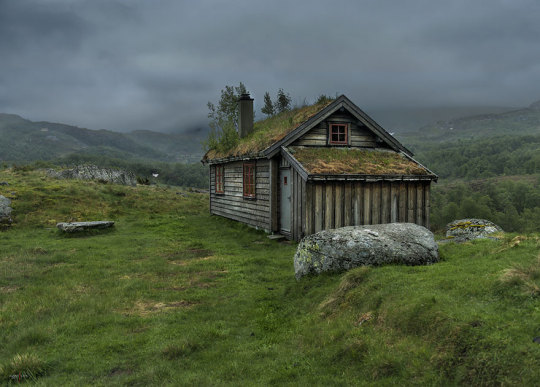
The Norwegian countryside is strewn with architecture that looks better suited to crown the pages of a fairytale book. More commonly known for its Vikings heritage and fjords, these photographs display a wide variety of architectural styles that have been used throughout the Middle Ages to the 19th century in Norway. Check out the stunning collection below.
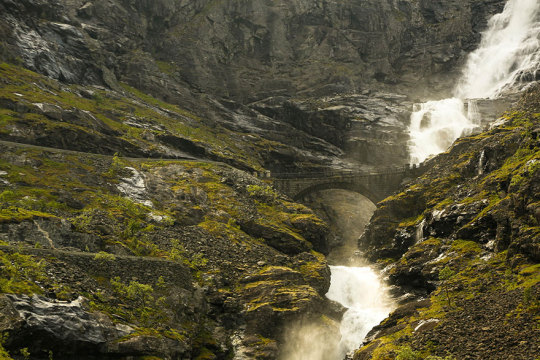
Crooked and towering wooden churches beckoning like an old crone’s fingers, winding stone path weaving through a forest, hidden waterfalls and lonely wooden cabins overlooking a vast valley at its base are some of the outlandish homes and architectural designs we have featured in this series. Teetering Stave churches, eerie waterfalls cascading down like a creature with its own mind, wooden homes made in the typical Norwegian indigenous style called byggeskikk have none of the linearity or conformity that modern buildings do, and have whimsical elements that heighten its sense of magic.
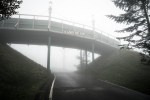
Each of these structures below have a particular way of being set into its own environment, standing out from the elements without obstructing nature. Most of the buildings and bridges and pathways have been built with stone and wood balance the scene it has been engineered upon.
BUNKER – Bunker is a theme bar set into the post-apocalyptic future, where not much has left of the world as we know it. Territories are controlled by clans, the world is wrapped into clouds of ash and toxic gases, rivers are polluted, cities destroyed.A group of survivors has created a safe haven in the bar, where they are making sure that people have access to oil, gas, weapons, water, medication and a place where they can escape from everyday stress and dangers. It can be the story about a place where surviving warrior clans meet and are required to store their weapons and pass through an imaginary scanner. It’s a neutral territory, where violence is forbidden and even warrior clans must show understanding.In the evenings the bar turns into one of the most popular, as well as one of the most guarded hangout spots in district X (former Murska Sobota), where the survivors clans of the apocalypse from near and far are gathering.In this scenario, the space is designed as a restaurant & pub, consisting of a ground floor and a first floor – both decorated in a massive-industrial style, diesel-punk with steampunk accents.
In 1970, 31 years after The Wizard of Oz was released, the Land of Oz amusement park opened in the resort town of Beech Mountain, North Carolina.
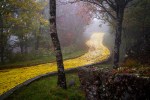
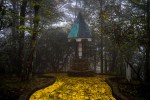
Equipped with a real yellow brick road and costumes from the movie set, visitors were made to feel like they themselves were Dorothy – venturing from the tornado ridden house to the Emerald City.
But only 10 years after opening, the park officially closed due to the developers going bankrupt. Today, the park is open by appointment only, and during some of the town’s high traffic seasons. Otherwise it’s completely empty, just like photographer Johnny Joo, an explorer who documents abandoned spaces, likes.
















 The X World